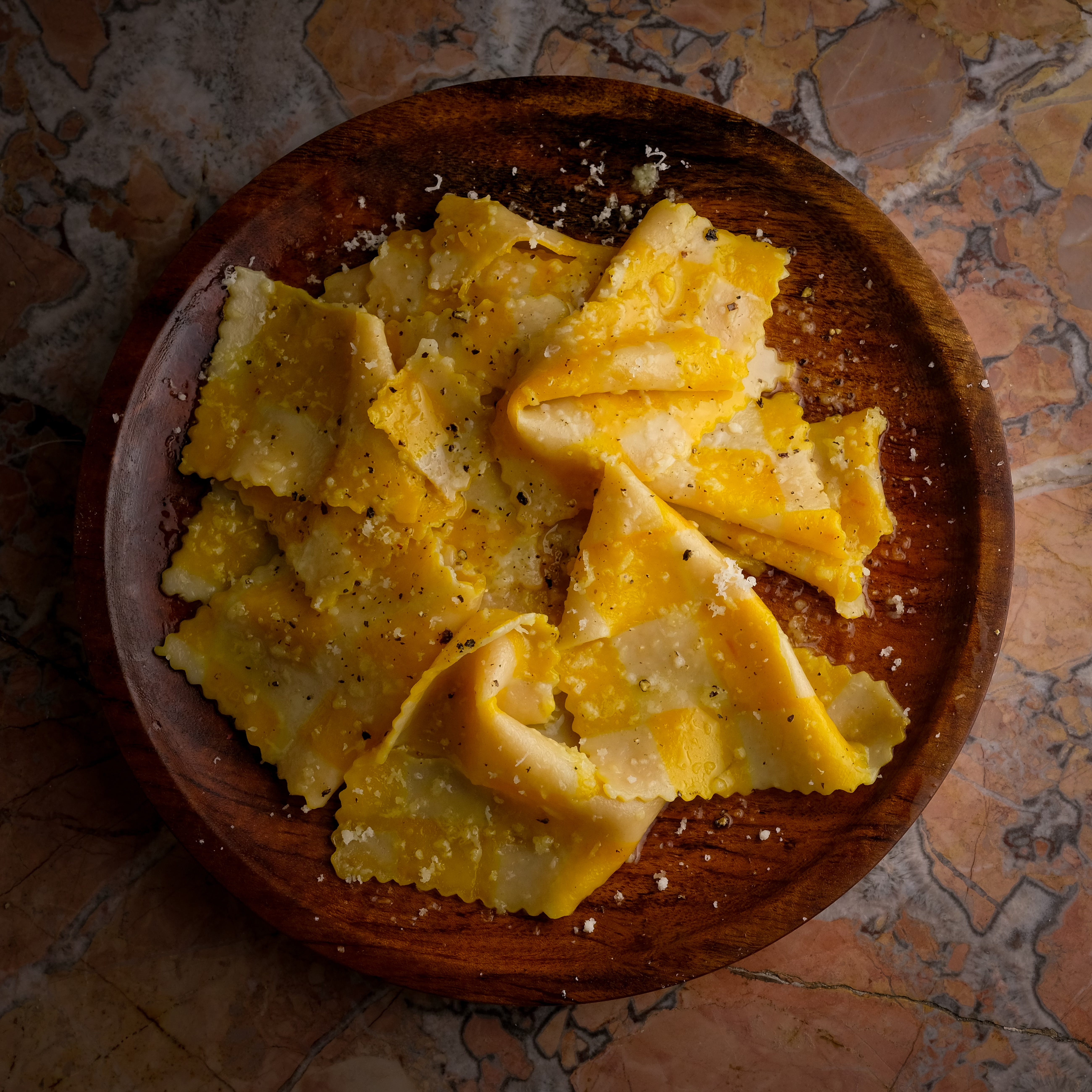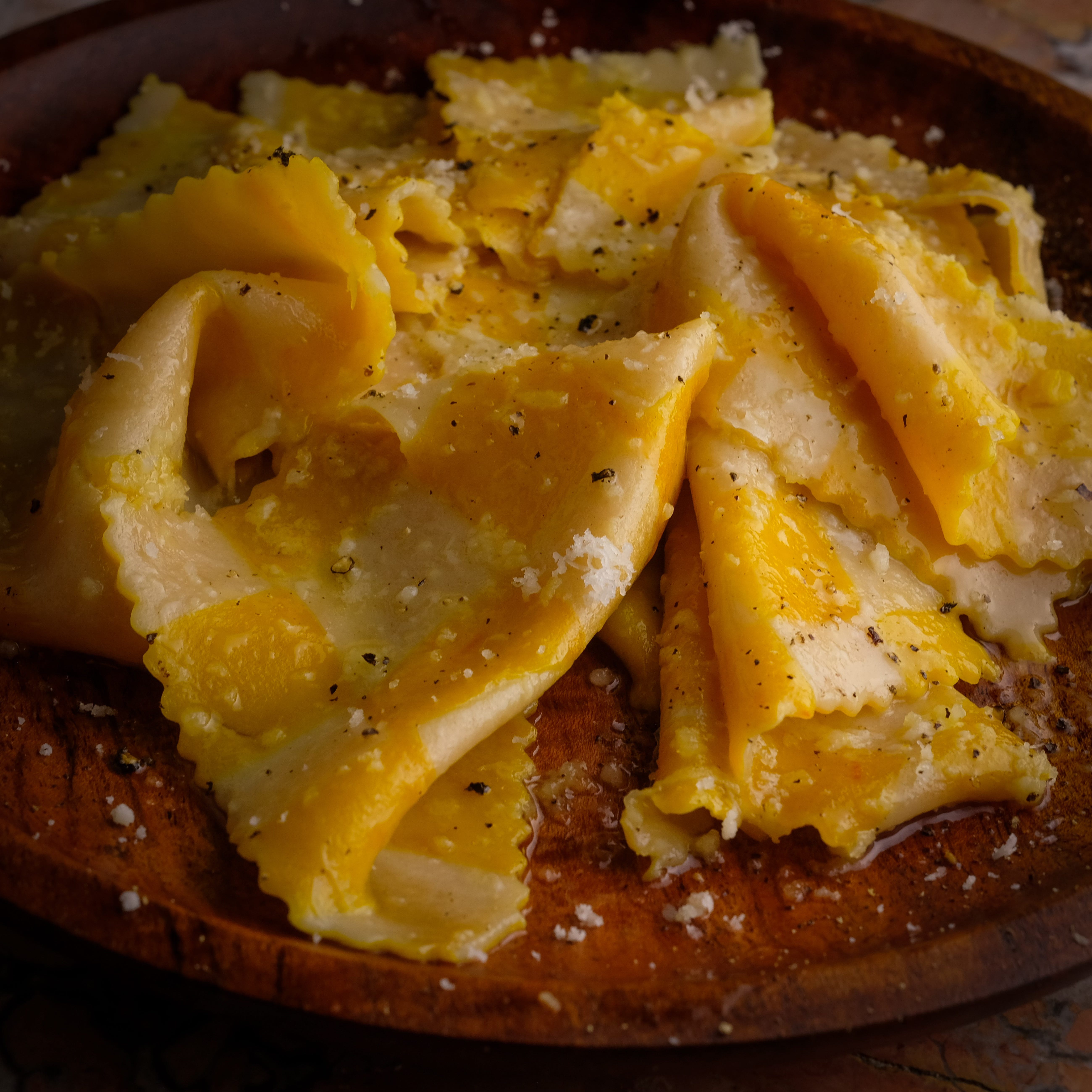
BBC Radio 4 is devoting today to the Normans, in celebration of the opening of the Bayeux Tapestry exhibition at the British Museum. I’ve just listened to the special edition of The Food Programme which asks what the Norman Conquest did for our diet… and I was heartbroken to discover there was no mention of pasta.
Maybe we should add some.
Over 200 years after the Norman Conquest of Britain began, during the last few decades of the 13th Century, an English scribe sat down and began copying Anglo-Norman passages onto a freshly prepared leaf of vellum. Among them was the record of Cressee, a dish now thought to preserve Britain’s earliest surviving pasta recipe.
More than 700 years later, we can still read the finished manuscript in the British Library, but the origins and historical transmission of its recipes remain uncertain. Could it have been an Anglo-Norman food or an older recipe concept that travelled much further, through the Norman network that stretched from Britain to the Kingdom of Sicily?
I wasn’t there, so I don’t know. But what I think what we can say with certainty is that Cressée is evidence that, by the end of the thirteenth century, sophisticated knowledge of pasta preparation was circulating in England. These techniques were being recorded many decades before The Forme of Cury, often described as the first British cookbook.
Except it isn’t.
The title by which we know it comes from an edition published by Samuel Pegge in 1780. Its preface attributes the recipes in The Forme of Cury to “the chief Master Cooks of King Richard II,” and the collection itself is dated to around 1390. Written in Middle Englis The Forme of Cury includes ravioles, a filled pasta equivalent to modern ravioli; makerouns, pasta pieces cooked and served with butter and cheese; and losyns, thin pasta sheets resembling an early form of lasagne.
But of course the Anglo-Norman recipes in the British Library pre-date The Forme of Cury by about one hundred years. Not only that, but they include other recipes for pasta dishes viewed as the forerunners to many other recipes that we still cook today. The Anglo-Norman ravieles were stuffed pasta. Kuskenole were filled pastries and could be the ancestor of modern British pies and pasties. And cressee were flavoured and coloured pasta squares.
Together, those three recipes read almost like a tool-kit of pasta techniques; knowledge that English scribes and compilers in the 13th century thought important enough to preserve. And it’s thanks to those records that I think we can reasonably infer that some cooks, probably at an elite level of Anglo-Norman society, were preparing them.
It’s tempting to examine the Norman contribution to British cuisine, even to state that by the end of the 13th century pasta dishes were on the way to becoming British foods. But I think the real question, though, is how these foods entered the Northern European cooking tradition in the first place.
That’s one of the questions that my next book, The History We Never Ate, will attempt to answer.