IN THIS ARTICLE:
with gusto and relish
early carbonara recipe timeline
on the plate
the recipe
WITH GUSTO AND RELISH
When I get my hands hold on an old cookbook nowadays, one of the first things I do is to flick to the index and take a glance at whether there’s an entry for Carbonara or Puttanesca - my current pasta history obsessions.
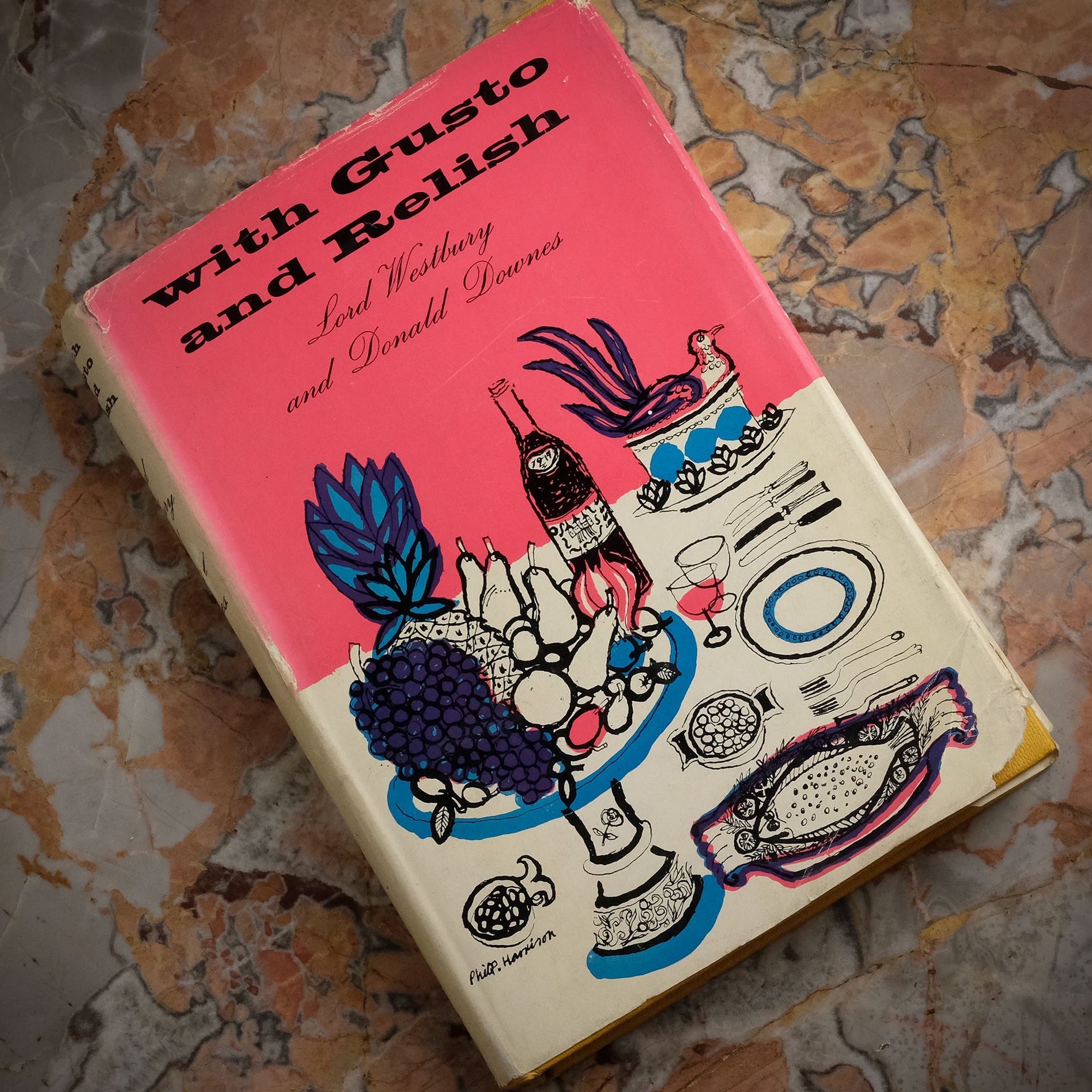
Imagine my delight when I received a 1957 copy of Lord Westbury and Donald Downes’ With Gusto and Relish which included recipes for both Carbonara and Puttanesca. Because neither of their recipes for those two pastas could be called an ordinary!
I’ll be bringing you Westbury & Downes’ surprising variation of Spaghetti alla Putanesca (their own spelling!) in a future article… today we’re going to marvel at their recipe for Spaghetti alla Carbonara di Santa Maria in Trastevere.
Now, if you’re relatively new to the world of Carbonara studies, you may not appreciate quite how monumental it is to see that recipe’s name in print. The Piazza di Santa Maria in Trastevere is mentioned by journalist Nora Koch-Berkhuijsen in her 1939 article which names the dish for the very first time. Berkhuijsen tells us that a trattoria in the Piazza was serving ‘spaghetti alla carbonara’; ‘strings’ like the charcoal burner’s wife makes them.”
Of course, this was just months before the outbreak of the Second World War and the beginning of the Missing Years in Carbonara history - the period for which, unsurprisingly, we currently have no written record of Carbonara, anywhere.
But Westbury and Downes’ book has produced a wonderful coda for the recipe’s early history. Simultaneously, it rounds off the path that began with Spaghetti alla Carbonara appearing in Berkhuijsen’s 1939 article and which would continue with several cameos in the immediate post war Italian media, before featuring in a two US publications… Then, during the same period in the early 1950s, we see a cluster of recipes for Carbonara across American, Italian, and British cookbooks and magazines.
1939: Nora Berkhuijsen’ description of ‘spaghetti alla carbonara’, ‘strings’ like the charcoal burner’s wife makes them” at the Alfredo Trattoria in Piazza Santa Maria in Trastevere.*
1948: Roman writer Renato Mucci describes eating steaming Spaghetti alla Carbonara in Piazza Santa Maria in Trastevere.
1949: The film Yvonne la Nuit starring Italian comic Totò is shot on location at Trattoria U. Galeassi in Piazza Santa Maria in Trastevere. In one scene incidental dialogue calls “Spaghetti alla Carbonara per tre” (‘3 spaghetti carbonaras!’)
1954: New York Times Rome correspondent Herbert Matthews recommends “another Alfredo” trattoria in Piazza Santa Maria specifically for carbonara, describing it as the “usual eggs, butter and cheese sauce” with chopped bacon.
1957: Richard Hammond and George Martin’s 1957 US restaurant listing Eating in Italy describes the carbonara at Alfredo in Piazza Santa Maria in Trastevere as containing “butter, cheese, bacon and pig’s cheek (guanciale).”
1957: Westbury & Downes publish Spaghetti alla Carbonara di Santa Maria in Trastevere in Britain.
*My recent research has uncovered evidence that the ALFREDO trattoria in Piazza Santa Maria in Trastevere was already operating as early as 1937 - I’ll publish this in next week’s Authentically British Carbonara article.
By naming their dish the way they did, Westbury & Downes’ recipe brings us full circle to Carbonara’s earliest known named origin, and the epicentre of what would be the start of the dish’s spread across the Italian capital.

ON THE PLATE
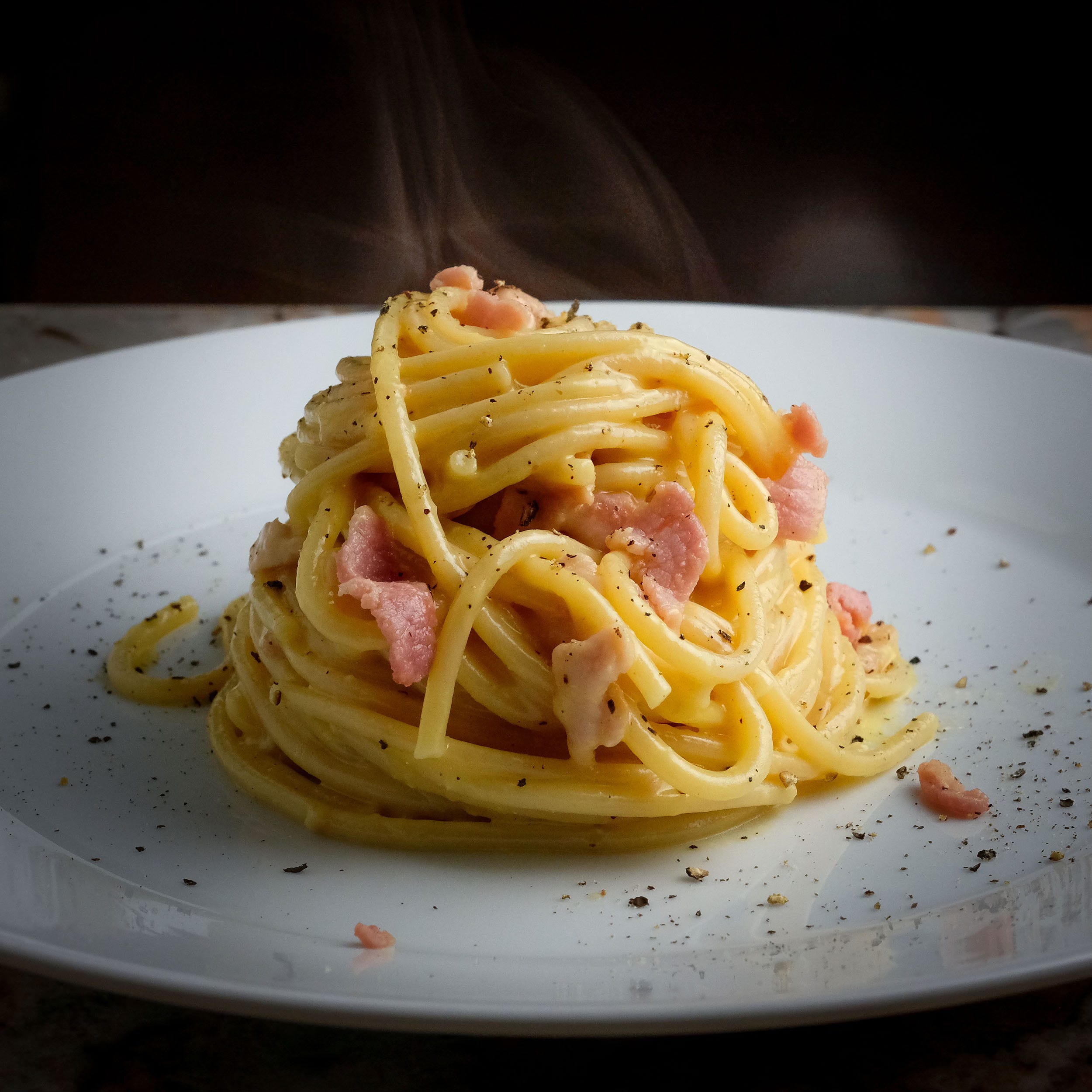
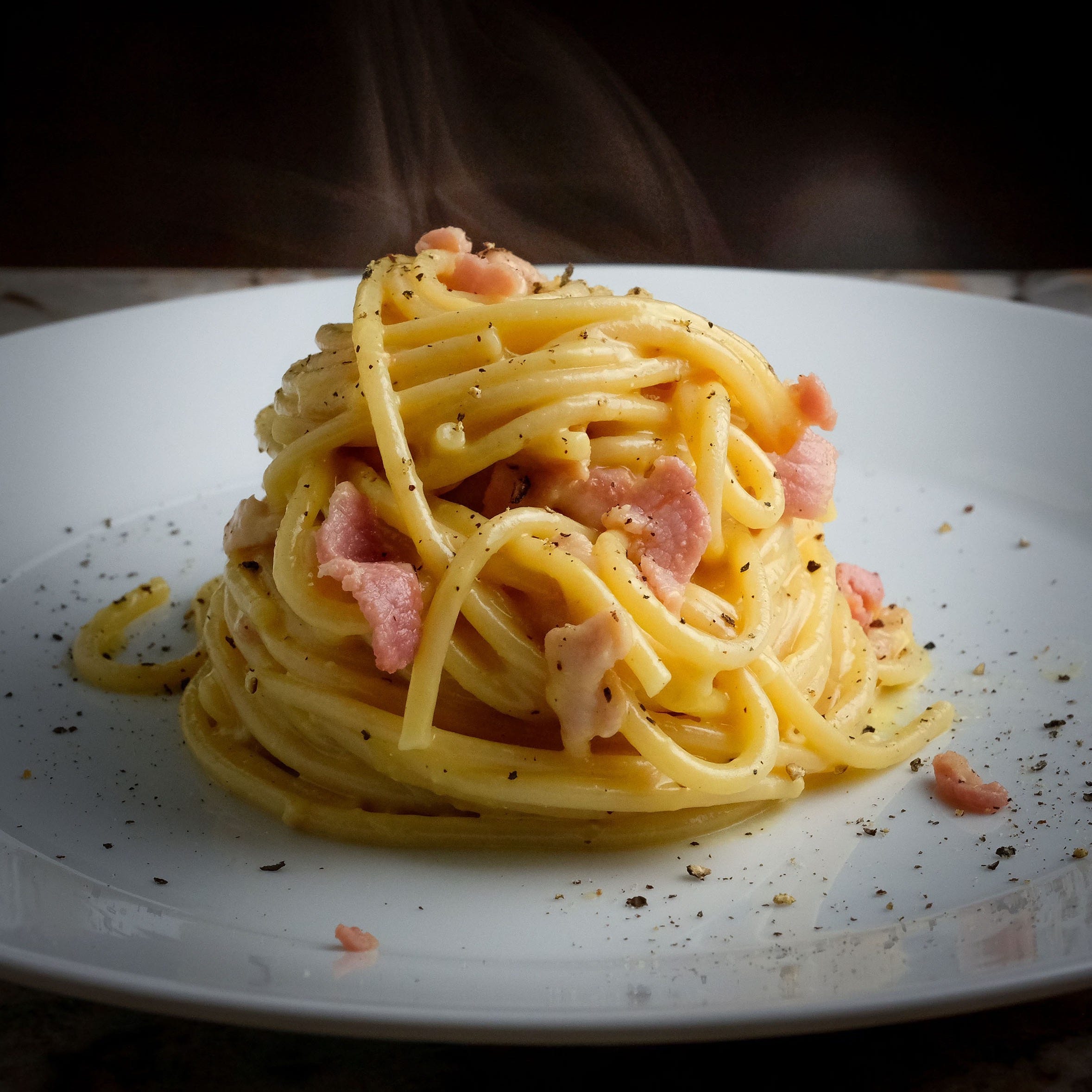
Like some of the other earlier Carbonaras I’ve cooked, some of the quantities here were very on the parsimonious side, so for my second test I’ve increased the amounts of bacon and cheese I used very slightly - that’s what you can see in the plate shots on this page.
The ‘Santa Maria’ Carbonara definitely isn’t what you’ll be served in Roman tourist traps today. I’d call it not over-sauced, but then I do prefer to be able to finish a whole portion of Carbonara. As with all of these historic recipes, remember you’re tasting history - and this variation of Spaghetti alla Carbonara definitely belongs to a much earlier evolutionary stage.
No, the bacon doesn’t have quite the taste of guanciale but I don’t think we should demand that it should. Pancetta or bacon was the most frequently used cut of pork in the 1950s - why impose modern flavours on the past? Ditto for the sauce. There’s not much of it, but that’s the point. Restrained extravagance. If you follow the recipe quantities you’ll get a subtly buttery, silky pasta with an understated glaze, not gallons of custard.
And I think that’s all you need to make simple ingredients combine and shine. Less is definitely more.
Recipe