IN THIS ARTICLE
recipe notes
a confession
three varieties
the great puttanesca debate
the history
Recipe: Spaghettoni Pizzati
recipe notes
A CONFESSION
This is a bit of a cheeky recipe because… we’re just making a variation of Spaghetti alla Puttanesca with… added cheese. However, having said that, I think this is actually a really interesting and alternative way to make Puttanesca. I actually find myself making this variation rather than ‘classic,’ cheerless Puttanesca, most of the time now.
‘Pizzati’ (plural), basically pizza’d - you might have seen the adjective applied to chicken, veal, steak or even focaccia in Italy. It simply means to make taste like a pizza… which is quite easy when it comes to Spaghetti alla Puttanesca because we’re only missing the mozzarella!
AVAILABLE IN THREE VARIETIES
My rather genius creation actually comes in 3 varieties… Spaghetti Pizzati Rossi (Red), Rosi(Pink) or Bianchi (White). I wonder if you can guess why?
Full marks if you guessed simply how much tomato goes into the mix. As you become a connoisseur of Spaghettoni Pizzati and find your faction, you’ll perfect exactly how much tomato (and what kind of tomato) to put into the recipe. I’ve used poppa, double-concentrate, and fresh baby plum tomatoes. But as the first rule of Spaghetti Pizzati Club is that there are no rules about how much tomato you use, I’m going to leave all that sort of stuff entirely up to you.
THE GREAT PUTTANESCA DEBATE
While we’re on the subject of Puttanesca, maybe it’s time to sweep away the biggest urban myth… and I may well cover Puttanesca history properly in another article.
You’ve almost certainly heard someone, somewhere, regurgitate the story about Puttanesca being invented in the backstreet brothels in Naples - the one where ‘Spaghetti alla Puttanesca’ is endlessly translated, badly, as ‘whore’s spaghetti’ / ‘slutty spaghetti’, and so on.
The story that tells you Puttanesca was a pungent, slightly spicy, strongly flavoured ‘pick-me-up’ dish; a quick, after-quickie pasta that your favourite hooker would rustle up for you right after you’d concluded the night’s business.
The story that was brought to you by at least 10 whole seconds of research.
Italian food is full of folksy, contrived, ‘origin stories’ that merely amount to sentimental rubbish. Invented and re-invented myths thought up as a means to prop up business or local pride and patriotism; ‘campanilismo’ (which I’ll also cover in a forthcoming article!).
THE HISTORY
And with Puttanesca, there are documented nineteenth- and early twentieth-century Neapolitan pasta dishes using combinations of the ingredients we now associate with this sauce… so… as with many other pasta dishes, it’s a case of the combination of flavours and ingredients coming first, and then the name coming later.
Much later, in fact. The first documented mention we have of the name ‘puttanesca’ is in 1961, Raffaele La Capria's 1961 novel Ferito a morte, which contains the line “spaghetti alla puttanesca come li fanno a Siracusa” — spaghetti alla puttanesca like they make them in Siracusa.
But the combination of many of Puttanesca’s ingredients had been established for over a hundred years before that. In the 19th century, Ippolito Cavalcanti’s Cucina teorico-pratica included a a recipe for “Vermicelli all’oglio con olive, capperi, ed alici salse” — vermicelli with oil, olives, capers and salted anchovies. Later, in 1931, the Guida Gastronomica d’Italia records Maccheroni alla Marinara from the Campania region of the south of Italy, with ingredients much closer to what we'd now recognise as Puttanesca: fresh tomato sauce cooked with oil, garlic and parsley, with capers and olives.
And guess what? No mention of the oldest profession anywhere.
But let’s jump back to the 1960s… Puttanesca… “in the style of a whore?!?!?” It was a ballsy, eyebrow-raising name, just right for the post-war generation. It stuck.
For those interested in what I think is one of the most likely origins of the modern recipe name, legend has it that it was coined one night in the 1950s on the Island of Ischia. Near closing time that night the owner of a local restaurant was pestered by a group of hungry customers to rustle up whatever he could for them, pleading ‘facci una puttanata qualsiasi,’ literally ‘make us any kind of puttanata,’ or as we might say, ‘just make us any kind of shit.’*
Maybe the chef was aware of the older combination of ingredients, maybe he wasn’t, but all he could find in the kitchen were tomatoes, olive, capers and anchovies. He threw in a chilli for good measure. The drunks loved it, as did he, and he stuck it straight on the restaurant menu.
* NB It’s interesting that we use the word shit in English as a multi-purpose swear word, whereas the Italians also use ‘whore.’ And frankly I’m pretty glad they do. I’m really not sure that Shit Spaghetti would have worked.
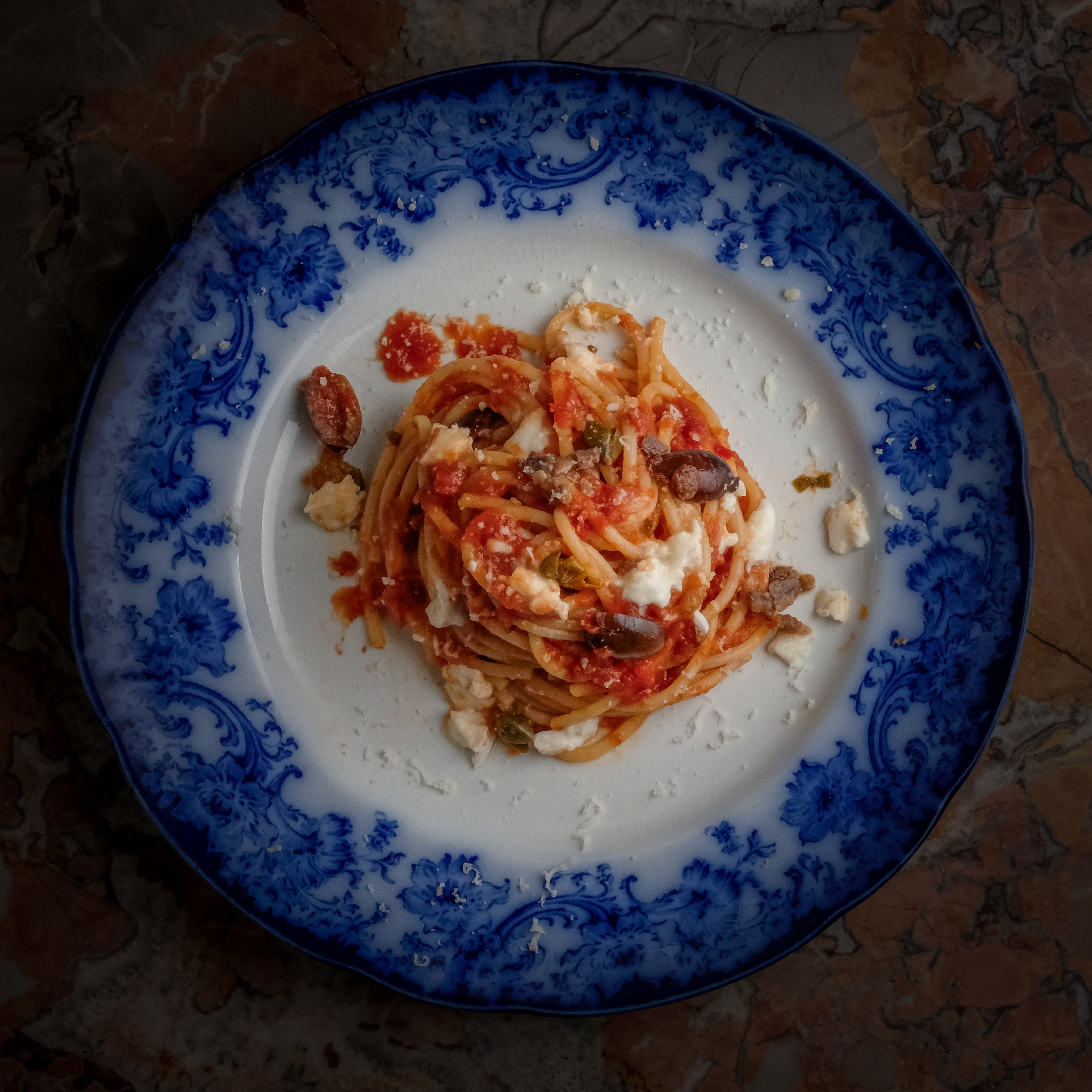
Mark Gowen’s Spaghettoni Pizzati (Rossi)
FOR 4 PORTIONS
400g tomato polpa / fresh tomatoes
1 mozzarella ball
2 tblspns black olives
1.5 tblspns capers
1 large clove garlic
fresh basil
4 anchovy fillets
PASTA
400g dry spaghettoni / spaghetti / linguine
MANTECATURA
none, simply combine using pasta water
method
prepare the ingredients
Weigh and prep the ingredients. NB The White version omits all tomatoes; the Pink substitutes a jar of sun-dried tomatoes in olive oil, cut finely, for the polpa. Cut the mozzarella into smallish cubes and tear a large handful of basil leaves. Chop the anchovies very finely, crush the garlic.
Rossi (red) version - make the sauce
Begin by making a tomato sauce with either fresh plum tomatoes or a tin of tomato polpa. If you’re using raw tomatoes, fry them in EVO with a crushed clove of garlic. Allow the tomatoes to cook down, adding water if need be, until they've formed a thick sauce - this will take between 20 and 30 minutes. If you’re using polpa, begin by gently frying the garlic in EVO for 60-90 seconds (without browning it) and then add the polpa - then add the capers and olives simmer for 15 minutes.
Rosi (pink) version - make the sauce
Drain the sun-dried tomatoes and chop them into fine slivers. Fry gently in EVO, together with the capers and olives, with a splash of wine, for 5 mins, then add the crushed garlic and simmer for another minute, then set aside.
boil the pasta
Boil the pasta until it’s cooked to your liking - for me that means a chewy ‘al dente’ - no firmness or inner hard, uncooked pasta remaining in the strands, just a pleasant, chewy ‘toothsomeness’ - which is a word I discovered recently in an antique cookbook. It needs to be rediscovered.
combine the sauce and pasta
Put 2 ladles or so of the sauce in a tossing pan and fish the cooked pasta out of the boiling pan and add it directly to the sauce. On the heat, toss to combine, throwing in a big handful of freshly torn basil leaves and adding tiny amounts of pasta water and more sauce as required. (Tomato sauces are generally juicy enough not to need starchy ‘mantecatura’ - final cooking with sauce and pasta water…. so don’t be tempted to make baby food!).
Turn off the heat and at the very last moment, throw in the chopped mozzarella and quickly fold it through the dressed pasta. The more you mix and the longer you take the more you risk the mozzarella melting and ending up in one big ball… so work quickly.
Plate each portion, sprinkling on the chopped anchovies, grated pecorino, and either black or cayenne pepper.
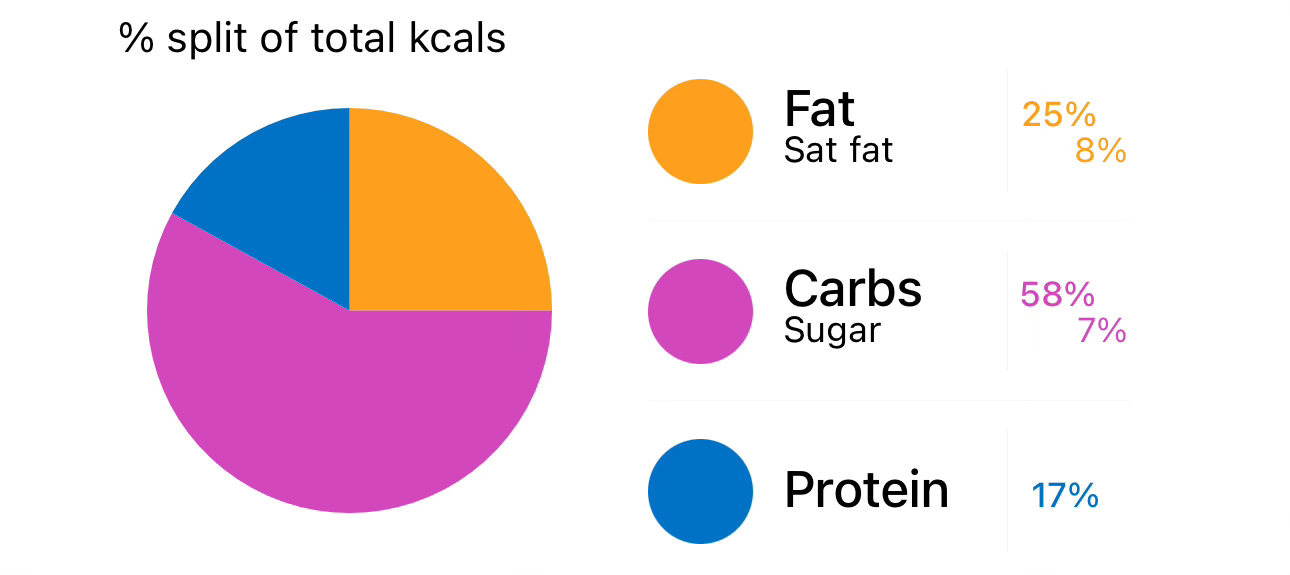
nutrition per serving (rossi): 566 kcal
fat: 15.2g • saturates 4.9g
carbohydrate: 78.8g • sugars 9.2g
protein: 23.7g • fibre 4.2g
salt: 2.47g