IN THIS ARTICLE
recipe notes
how I started making pesto
the quest for authentic pesto
Pragmatic Pesto
tips for perfect pesto
Recipe: Pesto Genovese
Pesto tips and trivia
the pesto factions

I was lucky enough to be able to stare at this amazing view every single summer of my childhood. It’s from near my grandmother’s house on the Italian Riviera in the small village of Polanesi, to the East of the city of Genova, looking towards Camogli and Portofino Mountain. Portofino itself and the Cinque Terre are a little further down the coast.
On holiday in Italy absolutely everyone cooked, from my grandmother to my aunts and all of my uncles. It might sound sugary and syrupy but that’s honestly how it was - focaccia on the beach, after dinner strolls for gelato, decades of family reunions and every single hello and goodbye with my dearest relatives and every friend I can think of, all with food in common.
And it was there, in the summer of 1977, that I ate pesto for the first time.
recipe notes
HOW I STARTED MAKING PESTO
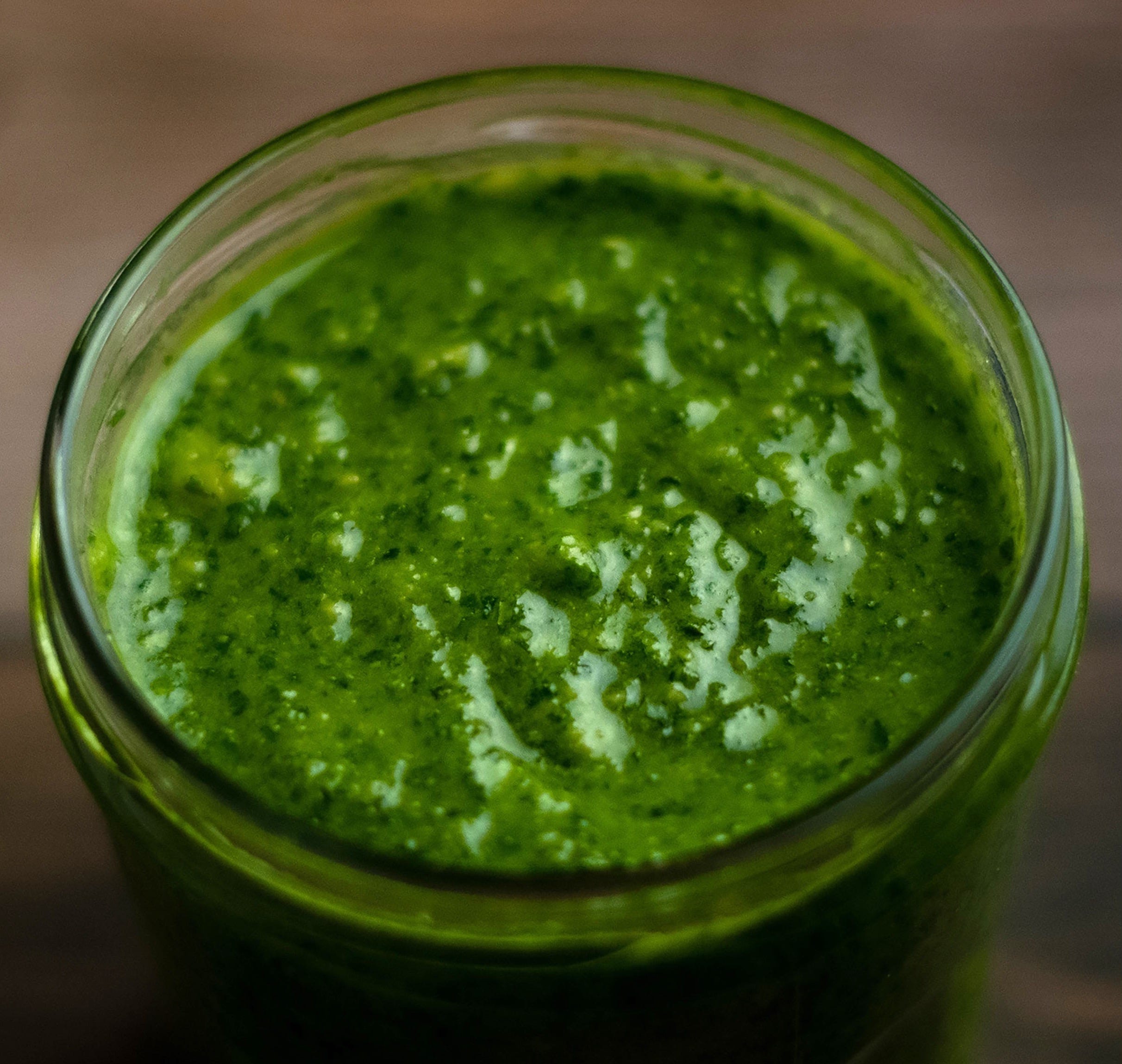
I want to share what’s been a recipe in development for over 40 years, since I started preparing it as a teenager.
In the 1980s you couldn’t go out and buy a pot of growing basil from a supermarket like you can today. You had to grow basil from seed. And that’s what I did; starting somewhere around 1984, each spring I grew as many trays of basil as I could and - eventually - made my first homemade pestos. Germinating and growing outdoors in South Wales made the basil pretty robust tasting, but I was overjoyed that I’d finally been able to make one of my favourite pastas.
And what a long way we’ve come - today most of us are maybe half an hour away from getting our hands on basil we can make pesto with, compared with the 6-8 weeks I had to wait in 1984.
Over the years I’ve tweaked and adjusted my pesto recipe - using supermarket basil when that first became available; for cheese, first parmesan alone and then pecorino and parmesan together when that appeared.
My only main substitutions now are having to use the shorter, fatter, ubiquitous Chinese pine nuts instead of the longer, creamier and more delicate Italian variety, and a mix of standard olive oil and extra virgin olive oil, instead of Ligurian Olive oil - which is milder then EVO but more flavourful than standard. And that’s where I was more or less over lockdown, when I was writing my book Pasta & Magic: Pesto Sauces, and I finally settled on a definitive pesto recipe.
PRAGMATIC PESTO
Many of you are interested in recreating historic recipes as close to how they would have been prepared in the past. I am too. In fact, I’m in the process of writing a book about historic recipes, and I’m adopting exactly this approach.
One of the reasons that people are drawn to recreating historic recipes is that they’re seen as the definitive, original, ‘authentic’ versions. The ones with the ‘proper’ ingredients and traditional methods. The ones where you can taste history. And that’s fine - I love the tangible link to the past and other generations too… but when it comes to recipe names or descriptions, ‘authentic’ and ‘traditional’ are some of my least favourite words to read. Right up there with ‘Trump’ and ‘Farage.’
And here’s why.
THE QUEST FOR AUTHENTIC PESTO
Pesto, like many other Italian recipes, didn’t just suddenly spring into being. The recipes we cook today are variations of a combination of ingredients that have gradually become codified over the decades. So saying a pesto is ‘authentic’ normally only refers to the most recent, contemporary version of the dish (unless there’s been a very recent, sudden change in its ingredients / techniques). And bizarrely, we often never assign the label ‘authentic’ to the earliest recorded versions of recipes, instead preferring to adopt more recent variations as sacred canonical dishes.
AUTHENTIC - BUT TO WHEN?
One of the first ‘modern’ recipes we have for Pesto Genovese is from 1863 and a Genovese chef called Giovanni Battista Ratto, who tells us to use basil, garlic, DUTCH cheese and oil. Usefully, he says that if we can’t get hold of basil, marjoram or parsley will do nicely. Notice there’s no mention whatsoever of pecorino, parmesan, or pine nuts.
Spaghetti alla Carbonara and Ragù Bolognese have similar back-stories. Amongst the ingredients for some of the first published recipes for Carbonara were bacon or cooked ham, rather than today’s guanciale; gruyére or parmesan instead of the modern choice of pecorino, and other unexpected choices like garlic, cream and CLAMS. Yet no one chooses to label those as ‘authentic’ Carbonara recipes, even though they predate anything we’re cooking today.
Similarly, Ragù Bolognese, which most of the world’s population would describe as a rich, red pasta sauce. Yet in Pellegrino Artusi’s 1891 recipe, again one of the first recipes published, there isn’t a tomato in sight. It’s what we call today a ‘white’ ragù. But again very few people would refer to that as a recipe for ‘authentic Bolognese.’
ARSE-BACKWARDS
I find all of that more than a little topsy-turvy. Or as food historians like to say, arse-backwards. It’s as if we’re imposing our modern, ‘codified’ versions of recipes on the earlier examples, implying that somehow they’d got it wrong, that our version is better.
But I don’t think we should get to choose which is ‘authentic,’ or even ‘traditional’ (and let’s leave that other can of worms for another day). If your idea of authenticity is based on chronology, or simply what came first, you need to respect early versions of recipes. We’re not those cooks and it’s not our food anymore, but it’s a damn sight more faithful to history than what the influencers are raving about on Instagram.
Back to pesto.
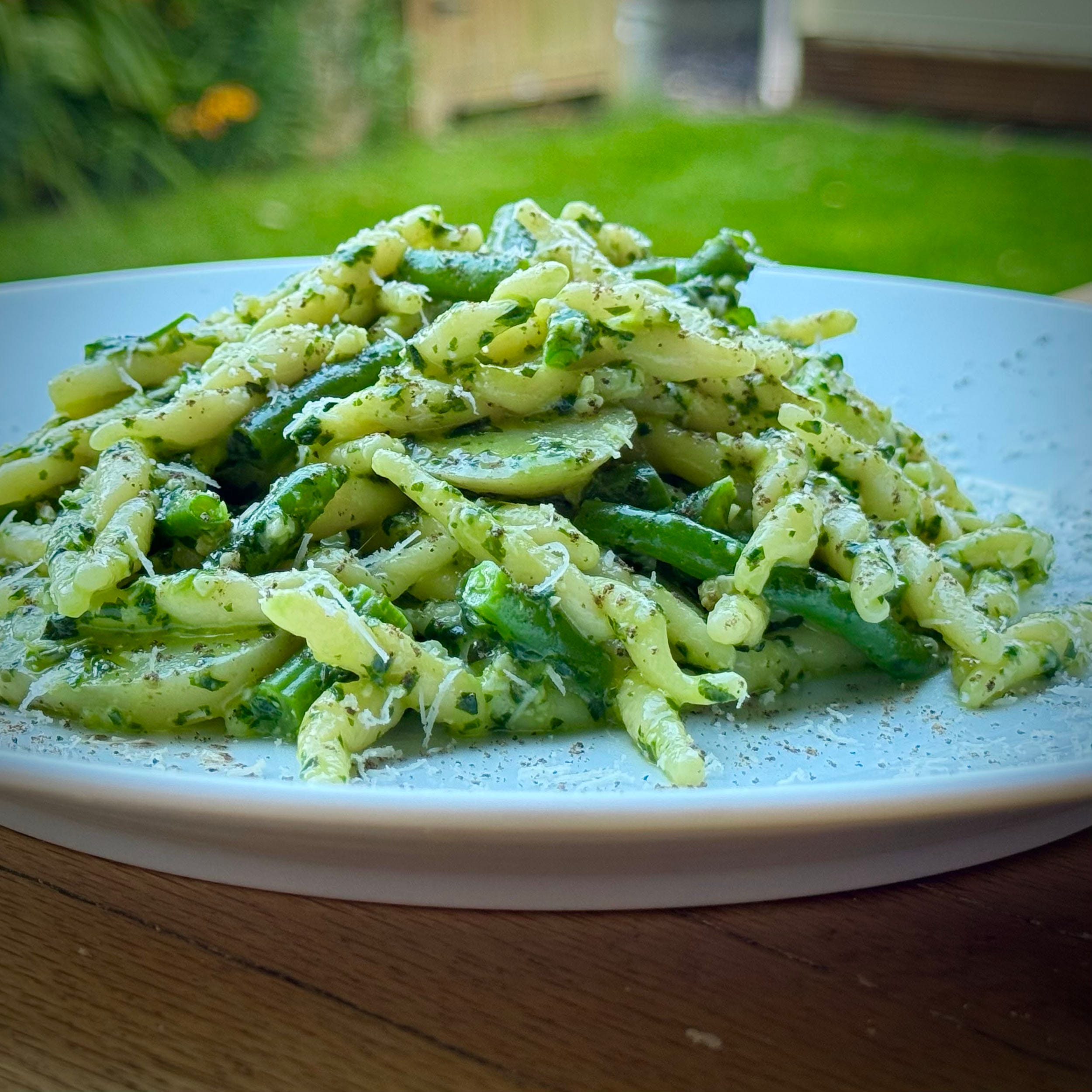
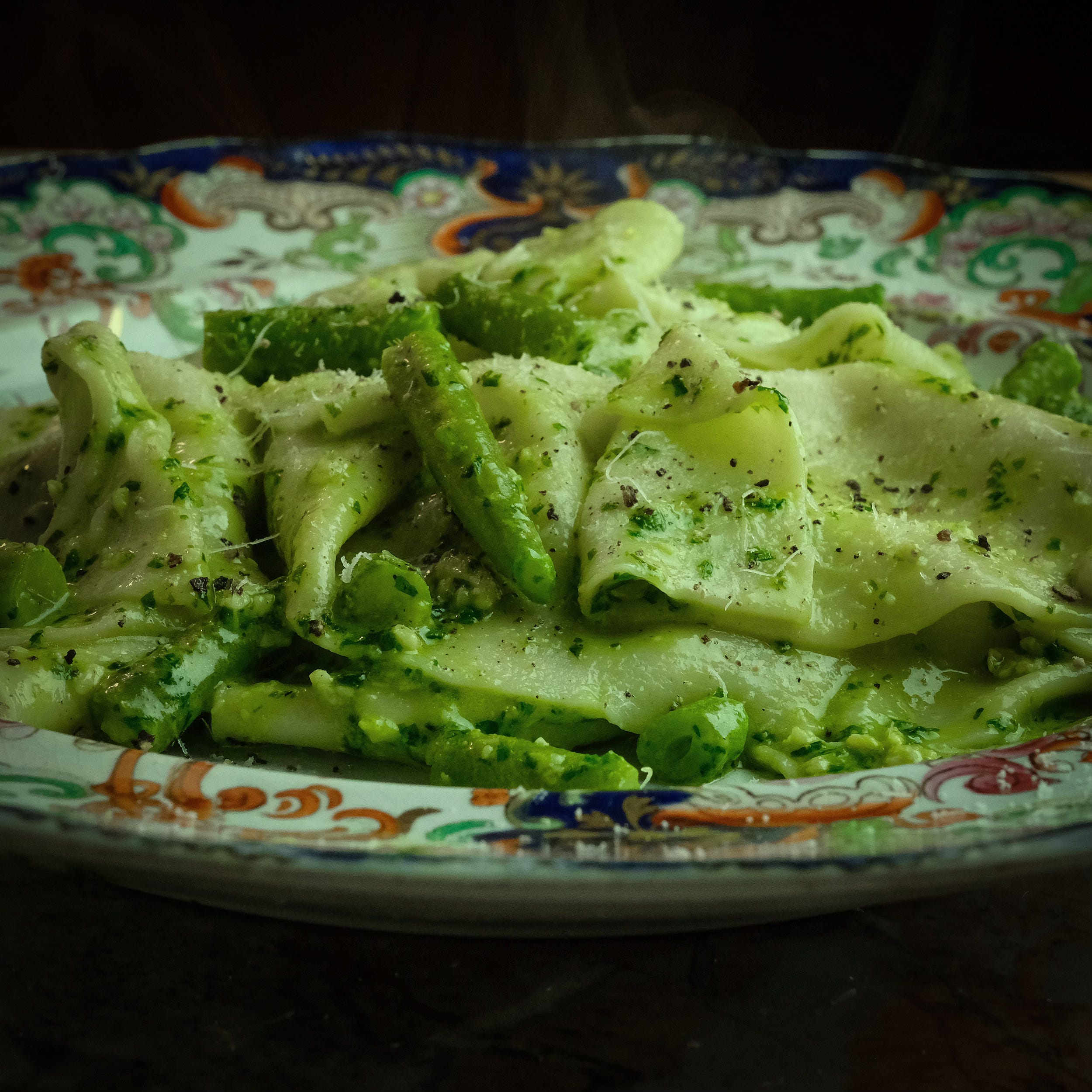
Here’s my Trofie with Pesto Genovese with Beans and Potatoes, from this summer. It’s what most Ligurians would describe as ‘authentic’ pesto. Because if it’s pesto, it’s got to be trofie and two-veg, as they don’t say in Genova.
But as we’ve seen, beans and potatoes weren't in the early 1863 recipe. They’ve crept in over the generations, along with options to use pasta like corzetti, mandilli di seta or trenette.
PRAGMATIC PESTO
And then there’s HOW you make the pesto itself.
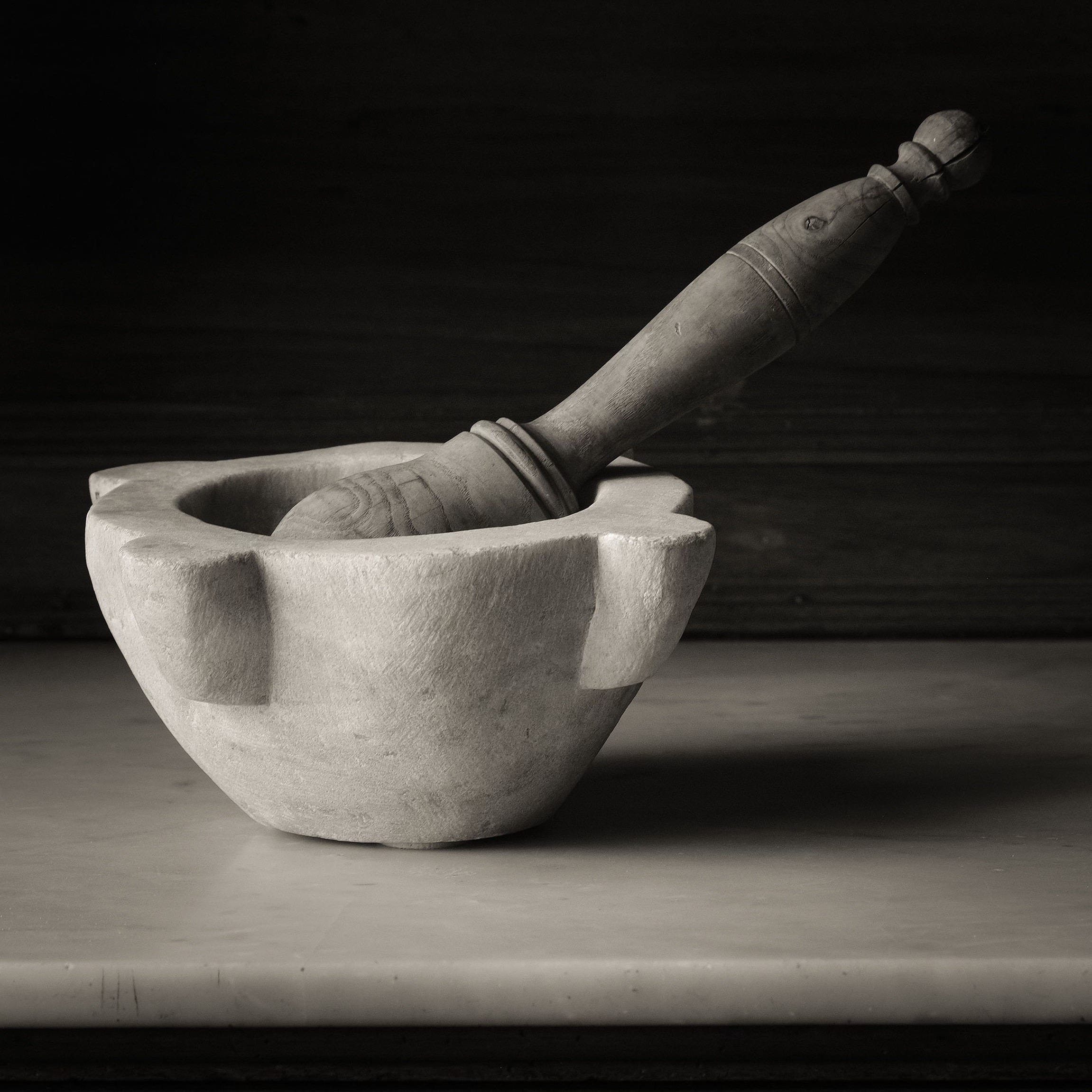
The purists/historical re-enactors will use a pestle and mortar to make their pesto (presumably because they like their food tech to show its age and heritage in millennia).
But when I’m cooking pesto at home I take a slightly more pragmatic view of the whole process (mostly because it’s quicker to chew a shipping container full of fruit pastilles than it is to make pesto with a pestle and mortar).
I make pragmatic pesto with my very clever electric pestle and mortar - my food blender.
And they tell me that’s wrong, that it’s not ‘real pesto;’ that I risk ruining the basil and also making the pesto too oily. Now, I’d agree that there’s sometimes marginally more oil needed if you use a blender, but that rather depends on the size of the your blender bowl and the quantity of basil you’re trying to blend. So in terms of oil content, the differences between pestling and blending can be negligible, and as you’ll see below, we can do really clever stuff to make sure our time saving tech still makes delicious pesto.
TIPS FOR THE PERFECT PRAGMATIC PESTO
Chill the bowl and blade of the blender for at least 30 mins in the freezer before starting to make your pesto. The purists have a valid concern - if you raise the temperature of the basil leave too much they can turn black and acquire a bitter taste. To avoid this, start with an ice-cold blender bowl and blade and…
Pulse-blend as you add each ingredient. DO NOT just press the button and walk away from the blender to do something less boring instead.
NEVER USE ICE CUBES to lower the temperature of the pesto. Adding water to pesto at the blending stage is a spectacularly bad idea as it will (1) make for watery pesto and (2) shorten the shelf life (or rather FRIDGE life) of any pesto you need to store.
Use slightly older, drier cheese rather than wedges that you’ve just unwrapped from their vacuum packing. I keep all my pasta parmesan and pecorino in the fridge cheese drawer wrapped only in paper kitchen towel. You’ll need to allow a week or so before your first wedges are ready to grate, but the difference you’ll see will be enormous. Instead of small, buttery curls that clog the grater and make a stodgy pesto, you’ll get light, snowflake-like whisps of cheesy goodness.
use an old-school hole-punch grater rather than a microplane grater. You’ll get finer, more snowflake-like shavings of aged cheese, rather than the larger curls produced by a microplane. The finer the grated cheese, the better it will mix into a pesto.
Buy pots of growing basil rather than the packets of ready-picked stalks with larger, more pointed, darker leaves grown in Africa or South America - they’re normally pretty bitter. Remember too that even growing plants in the colder seasons will give you stronger tasting leaves than those grown in warmer months.
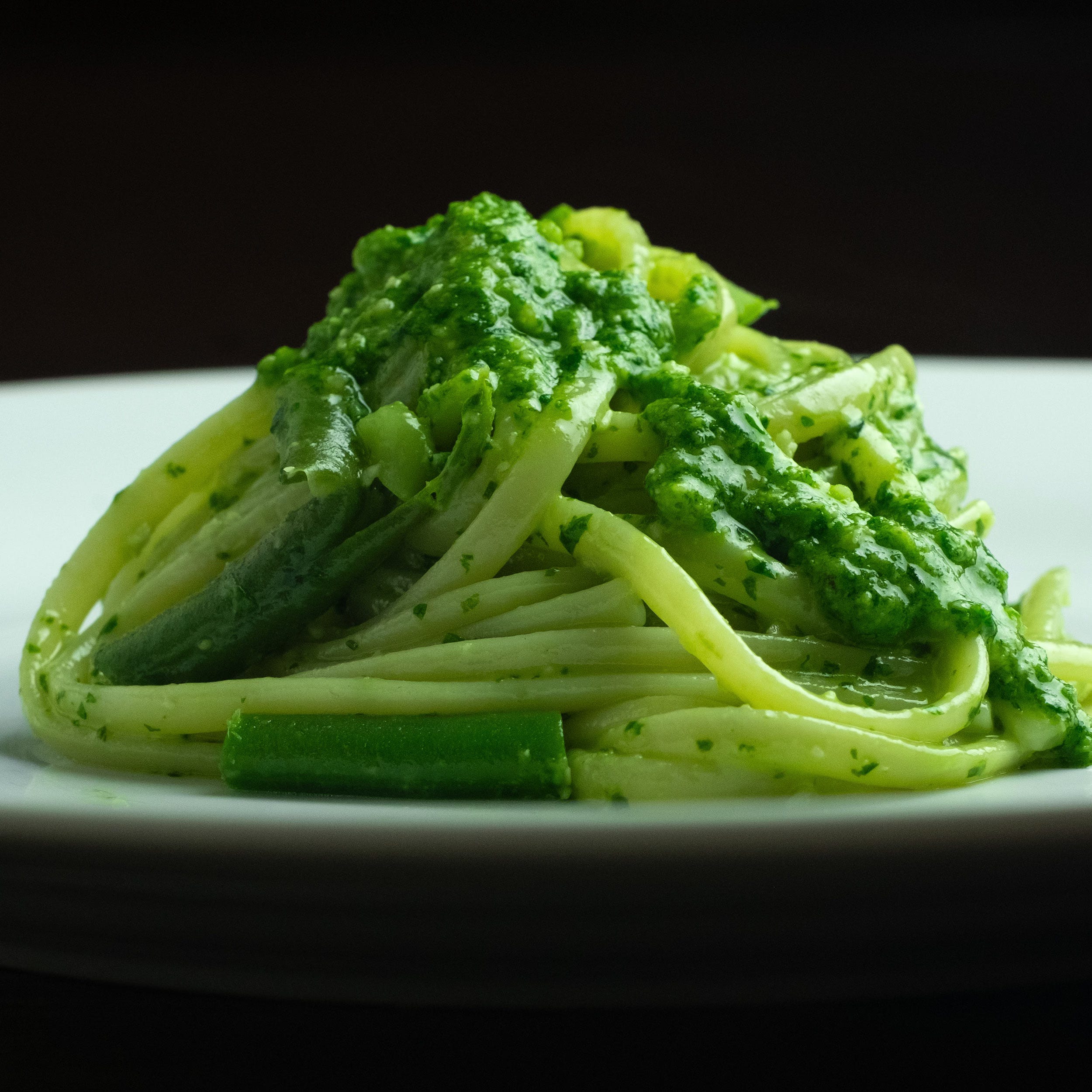
Mark Gowen’s Pesto Genovese
FOR 6 PORTIONS
approx 60g of a 50:50 mix of pecorino & parmesan
100g fresh basil leaves
120ml olive oil (50:50 mix EVO and Olive Oil)
1 large clove garlic
50g pinoli
black pepper
300g fine beans
PASTA
600g dry trenette / linguine / trofie / corzetti / mandrilli di seta
MANTECATURA
none, simply combine using pasta water
method
prepare the ingredients
Weigh and prep the ingredients. Pick the leaves by pinching the stalk as close to the leaf as possible, you want minimal stalk in the pesto. (If you wash the basil leaves, make sure they are as dry as possible before blending - I dry mine between tea cloths or kitchen towel.)
make the pesto
Using a blender, fit the bowl and blade you’ve previously chilled in a freezer for at least 30 mins to your blender. I start by pulse-blending all the leaves first, with a small pinch of salt. You can can go ahead and add all of the ingredients and continue pulse-blending - or, if you don’t trust my quantities, add a little of each, one at a time, until you have the balance of flavours you like.
pesto at room temperature
The pesto needs to be at room temperature before you start cooking, so allow at least half an hour for it to sit outside a fridge and come up to room temperature. It’ll mix much easier with the pasta and won’t cool the pasta down!
boil the beans / potatoes
If you’re going to serve your pesto with beans and/or potatoes, prepare the vegetables and boil them. Cut the beans into lengths about 30mm long and the potatoes into chunks the size of your thumb. Don’t overcook them.
At this stage, if you are cooking for others, make sure they’re sitting down at the table waiting for their food - if your guests are anything like my family, call them to the table at least 15 minutes in advance, make sure they’ve all washed their hands or used the bathroom or done whatever else they need to do before eating, and then tie them to their chairs.
boil the pasta
Boil and cook the pasta - when it’s done to your liking, put about half the total pesto into a pre-warmed tossing pan (warm it with some of the pasta cooking water, then discard it), and loosen it up with perhaps a third of a ladle of cooking water. Fish the pasta out of the cooking water and add it immediately to the tossing pan, off the heat.
combine
Toss to combine, adding more pesto and tiny amounts of cooking water if it feels too sticky, but don’t turn it into a runny mess. When the pasta and sauce are nicely combined, throw in the beans and potatoes. Toss and combine and then serve with lots of black pepper and grated pecorino or parmesan.
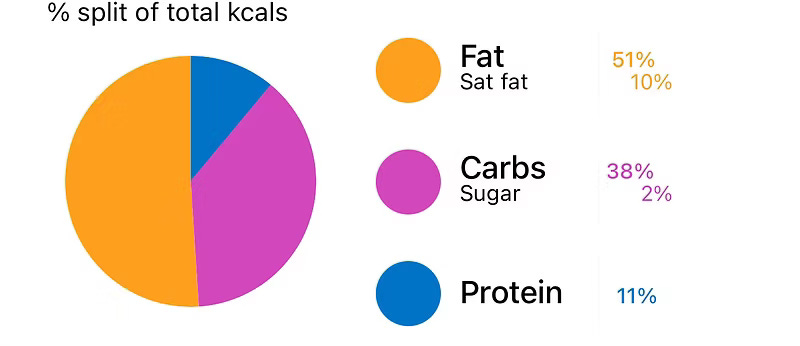
nutrition per serving: 761 kcal
fat: 42.4g • saturates 8g
carbohydrate: 71g • sugars 4.1g
protein: 21.3g • fibre 3.8g
salt: 0.51g
pesto tips and trivia
We’re not doing much history of pesto today, but there are a few things you need to be aware of, when it comes to planning your pesto. Number one - and surprisingly - everyone, even in Genova, has an opinion. I’m sure this comes as something of a shock to you, as we’re so used to Italians always speaking with one voice and never disagreeing about recipes, ingredients or techniques.
In Genova, Pesto is a pretty serious matter of involving a handful of related but very, very different factions. I’m not sure if there are websites, flags or t-shirts available (there must be somewhere), but for now simply be aware of the following pesto creeds.
the pesto factions
Pure Pesto (solo pesto): Does what is says on the tin. You like your pasta simply dressed with pesto. Maybe a little cheese and pepper on the top.
Pesto with Beans (pesto con fagioli): My own allegiance. We’re a noble group and we embrace diversity. That’s why we eat pasta with pesto and boiled green beans. Simple, stylish, classic rock.
Pesto with Beans and Potatoes (pesto con fagioli e patate): I’ll confess here and now that I’m an occasional member, though I certainly don’t subscribe to the supremacist views of some of the brotherhood. Adding beans and potatoes to pesto is gradually catching on outside Genova and even abroad - though chances are if you serve this to you next dinner party guests, they’ll look at you like you’re an utter nutter.
Altre Bellinate: A bit rude, best to just translate it as ‘other weird ways of cooking pesto.’ Not a huge movement within the walls of Genova itself, but the general premise is the further you travel from Liguria’s borders, the more likely you are to find them. Barbarians. Lemon…walnuts…cream. Pesto without basil. Spinach. Cavolo Nero. Sage. Sweetcorn. TOFU.
Within those core pesto factions, there exist a number of shadowy sects:
The Pestlers: Another fundamentally nasty, supremacist sect, they see the only path to true pesto beginning with a Pestle and Mortar. And while it’s far, far quicker to chew a shipping container of fruit pastilles, Pestlers won’t consider making pesto any other way.
Pesto without Garlic: Actually the first variety I ever tasted. My aunt was allergic to garlic so that’s what was served. But, my God, we were young. Impressionable. WHY?
Cooked Pesto: Frankly, far better to have your eyes pecked out by drunken crows. Unless you’re that bloke in Greenwich market, sitting there all day tossing a pan of pesto gnocchi, turning the basil black and making a horrible, greasy mess, never, ever, cook pesto.
Gnocchi: Let’s get it on the record now. I am not, and have never been, a willing eater of gnocchi, which are in most circumstances deeply flawed and simply wrong. Even more so gnocchi combined with pesto, like that baboon in Greenwich Market.
Trenette: The waters muddy when it comes to your pasta shape of choice. If I had to choose one, it would be trenette. A little like linguine, a long shape that enchants, wraps you in its silky, oily strands and always, always leaves you wanting more. I quite like them.
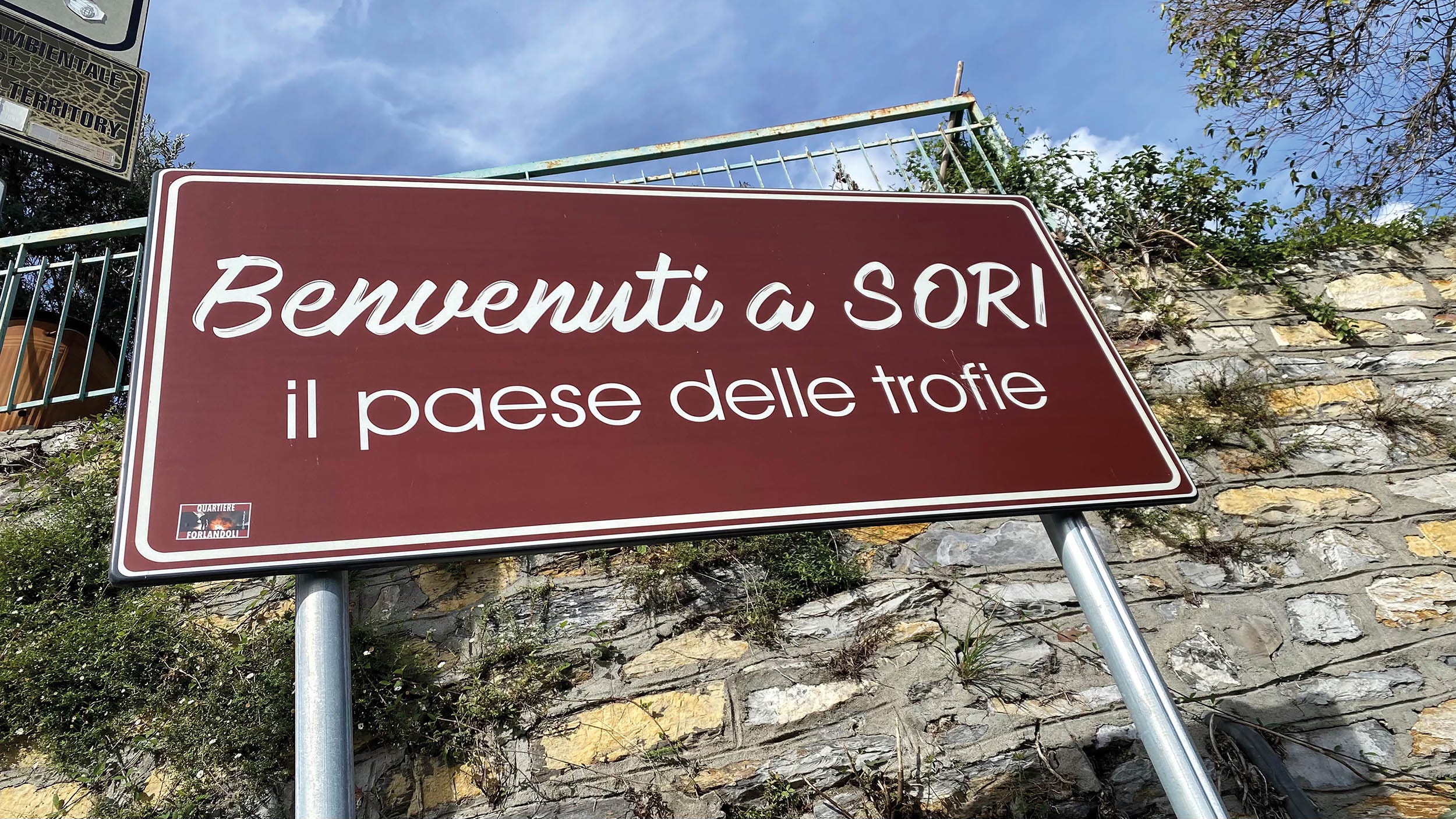
Trofie: I should like them more than I do. They’re short. So am I. More importantly, trofie are supposed to have originated within a couple of miles of where I spent all of my childhood summers - between the villages of Sori and Recco and Camogli in the Golfo Paradiso - and until the 1950s few people outside of that small area had ever heard of them! If short pasta’s your thing, your pesto needs to go on trofie.
Mandilli di Seta: … or in Genovese, mandilli de sæa - silk handkerchiefs. Another rediscovered Ligurian pasta shape, we might only be able to trace mandilli to the 18th century - but my research is work in progress, so watch this space! Mandilli di seta are super thin squares of pasta, a little like thin lasagne sheets.
Corzetti: Round, flat discs of pasta, a little like communion wafers (Don’t be tempted to use those, they don’t boil well). The origin of corzetti has recently been debated, but many believe the name to come from the corzetto or crosazzo, a 14th-century coin from the Republic of Genova. There’s another theory that the name has its roots in the ancient Indo-European word for ‘dip’ or ‘hollow,’ which can still be found in place and street names in Liguria today. This theory in turn spawned a hypothesis that the very first corzetti might have been a dragged shape, with a central hollow, a little like bigger versions of modern orecchiette. Which I suppose begs the question, could orecchiette actually be Genovese?