


IN THIS ARTICLE:
how we really cook
wonderful things
recipes are like starlight
sex, lies and spaghetti
the ingredients
what was invented and where?
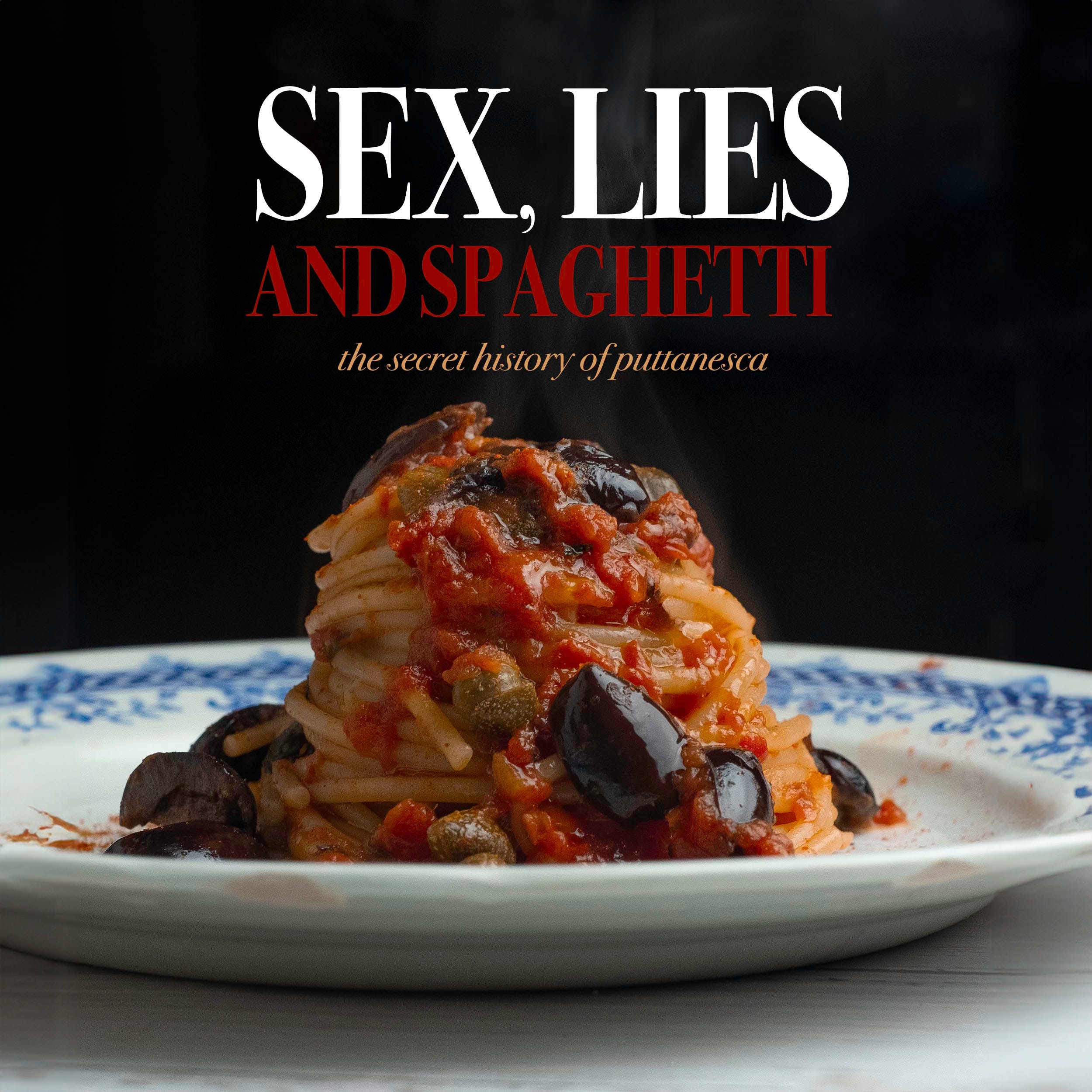
Hiding in plain sight for over half a century, the history of Spaghetti alla Puttanesca teaches us more than almost any other recipe about how dishes are named, evolve and reach celebrity status - sometimes for entirely the wrong reasons.
HOW WE REALLY COOK
Some of my good friends are food historians. But there are others out there who seem determined to approach food history in a really linear way. This recipe came first, that one influenced this one, which led to this variation, and so on. But the truth is, when you and I cook, when we throw new dishes together on a Saturday night for a special weekend meal, we’re not always advancing the history of a recipe in a linear way. However, even though we don’t have to be bound by seasonality and we can combine new flavours and ingredients in a way that the cooks of the past couldn’t, I don’t think there’s any reason to believe that they were less inventive than we are.
I can cross continents and come up with a new recipe that uses unfamiliar combinations of ingredients on a whim, just by crossing the supermarket aisle. What influenced the historical cooks to create their recipes, though, is far more fascinating than that, and considerably harder to work out. But I have a feeling it’s more complicated than simply drawing lines to link recipes on a diagram.
So I think there might be a real case for taking a much broader approach to food history. In the case of pasta, maybe that means identifying families of dishes that share ingredients, techniques and characteristics - even if they have different names. Because what I’m discovering more and more in the course of my research is that trying to follow the history of a recipe’s name can tell you surprisingly little about the history of the dish itself.
So I’m going to do the opposite. I’m going to follow the trail of the ingredients in Puttanesca.
And, in a bit, I think we should start with a trip to a brothel.

WONDERFUL THINGS
First let’s step back and take a wider view - and this is the bit when I break open the tomb and you get to see ‘wonderful things.’ The diagram I’ve drawn above illustrates my recent research into Puttanesca - a collection of historical recipes sharing ingredients and characteristics with the dish we recognise today, alongside others that appear to belong to the same extended family.
But here's the crucial part - unlike a family tree, the recipes in this diagram aren't meant to show a direct line of descent.
My diagram shows recipe variants that have appeared over time; some with shared and some with very different characteristics - but you shouldn’t assume that any of them is necessarily a consequence of any of the others.
I don’t want you to think that Cavalcanti’s 19th-century Vermicelli recipe has to be, for example, the reason my neighbour came up with an idea for a Minimalist Puttanesca. My next-door neighbour hasn’t the slightest idea who Ippolito Cavalcanti was, but the combination of ingredients Cavalcanti devised might have been the catalyst for this distinctive family of pasta sauces - ideas that perhaps travelled through space and time from 19th-century Naples until, one autumn day in 2026, they reached Sharon next door.
So the point is the family of sauces evolves because the recipes and the knowledge is out there, being shared and tinkered with and constantly adapted; all of us choosing to add more of this or that or -yuk- to leave that one out altogether.

RECIPES ARE LIKE STARLIGHT
Honestly.
A few weeks ago during the hot weather in London I couldn’t sleep and found myself, unusually for me, thinking of pasta. And that’s when it hit me. The historical recipes we uncover today are very like what astronomers see in the sky. Recipes are snapshots of moments back in time - a glimpse of the tastes we enjoyed and the cooks we used to be. They don’t always tell us when that combination of ingredients was first cooked, how many people were already preparing something similar, or even what happened to it afterwards.
But just like the darkness in astrophotography doesn’t mean there’s nothing there in reality, the gaps between my recipes on the diagram don’t mean there was nobody cooking something like a ‘puttanesca’ at that time. In fact, possibly again just as with astronomy, the more we look, the more we’re likely to find!
Let’s get back to those hookers.
SEX, LIES AND SPAGHETTI
You’ve probably heard the origin story - back-streets of Naples, whore houses, ‘slutty spaghetti,’ ‘slaghetti,’ and so on. You might have even read accounts of alternative theories explaining how this pasta dish got its admittedly rather unusual name. Maybe you believed some of them.
If you did, today might need to be Atonement Day. Because in this mini-series I’m going to show you why all those stories of how Puttanesca was invented - and even how it got its name - might just be complete and utter nonsense.
So where did all of those accounts come from in the first place? Who decided that Naples’ prostitutes had anything to do with a plate of pasta? Was anyone actually telling these stories when the dish supposedly came into existence? Or did someone simply translate a bizarre recipe name, which prompted the creation of a historical narrative? Have we actually just made up Puttanesca’s seedy back story?
I’ve been looking into the brothels of Naples, so to speak. Despite the countless retellings and sharings of a story people seem to desperately want to believe, I’ve yet to find any convincing documentary evidence connecting the invention of Spaghetti alla Puttanesca – or even its naming – to Naples’ sex workers. What I have found, though, are some rather revealing examples of when and where the story might have started to be told.
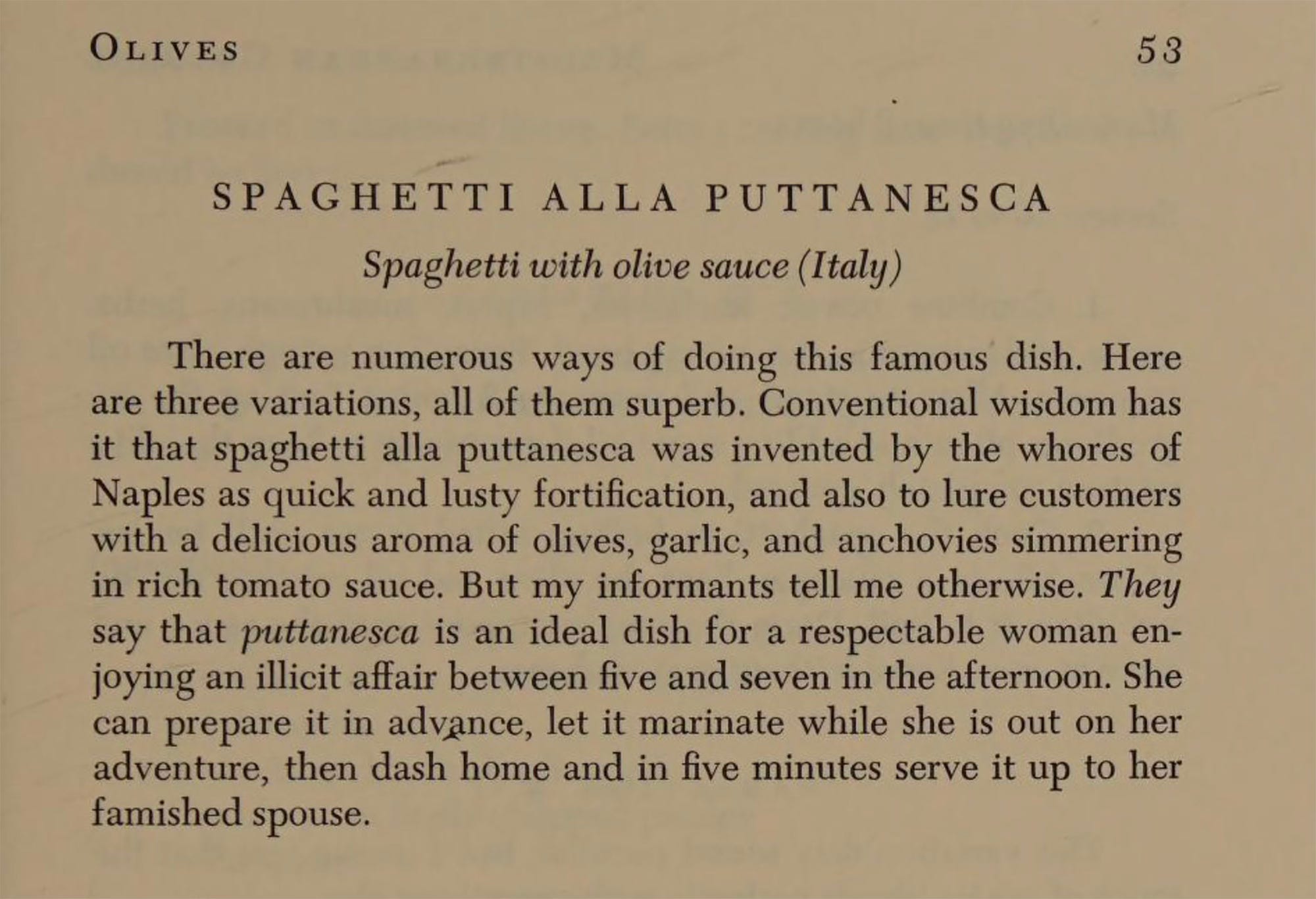
By the 1970s and 1980s, food writers like Paula Wolfert and Diane Seed were linking Puttanesca to Neapolitan prostitutes. In 1977, Wolfert described the supposedly irresistible cooking aromas used to attract customers, although she also adds an anecdote about the dish being perfect for cheating housewives needing to prepare dinner quickly for unsuspecting husbands. A decade later in 1987, Seed tells us in The Top One Hundred Pasta Sauces that prostitutes on the job had little time to go shopping and would be forced to improvise simple pasta dishes like Puttanesca from store-cupboard ingredients. By 1998, Arthur Schwartz’s Naples at Table gives us three explanations to choose from: a brothel keeper in Naples’ Spanish Quarter serving the dish to his customers, a supposed resemblance between the sauce’s ingredients and the colour of the prostitutes’ underwear, and even a French prostitute named Yvette, who’s supposed to be responsible for giving the dish its salacious name.
There is remarkably little historical evidence – if any – offered to support any of these explanations.
But I think that, to use one of my favourite food historian’s terms, all of that might be a little arse-backwards. Before we try to reverse-engineer a meaning from a recipe’s name, shouldn’t we first establish what went into the dish? Or, more importantly, whether the dish itself existed somewhere else long before anyone called it Puttanesca?
THE INGREDIENTS
A few seconds’ Googling will point you towards Naples, of course, and a number of recipes written by just one man, Ippolito Cavalcanti, in the first few decades of the 19th century. These dishes, however, don’t include what we’d recognise as the modern combination of Puttanesca ingredients - tomato, olives, capers and anchovies - and none of them carries the name Puttanesca.
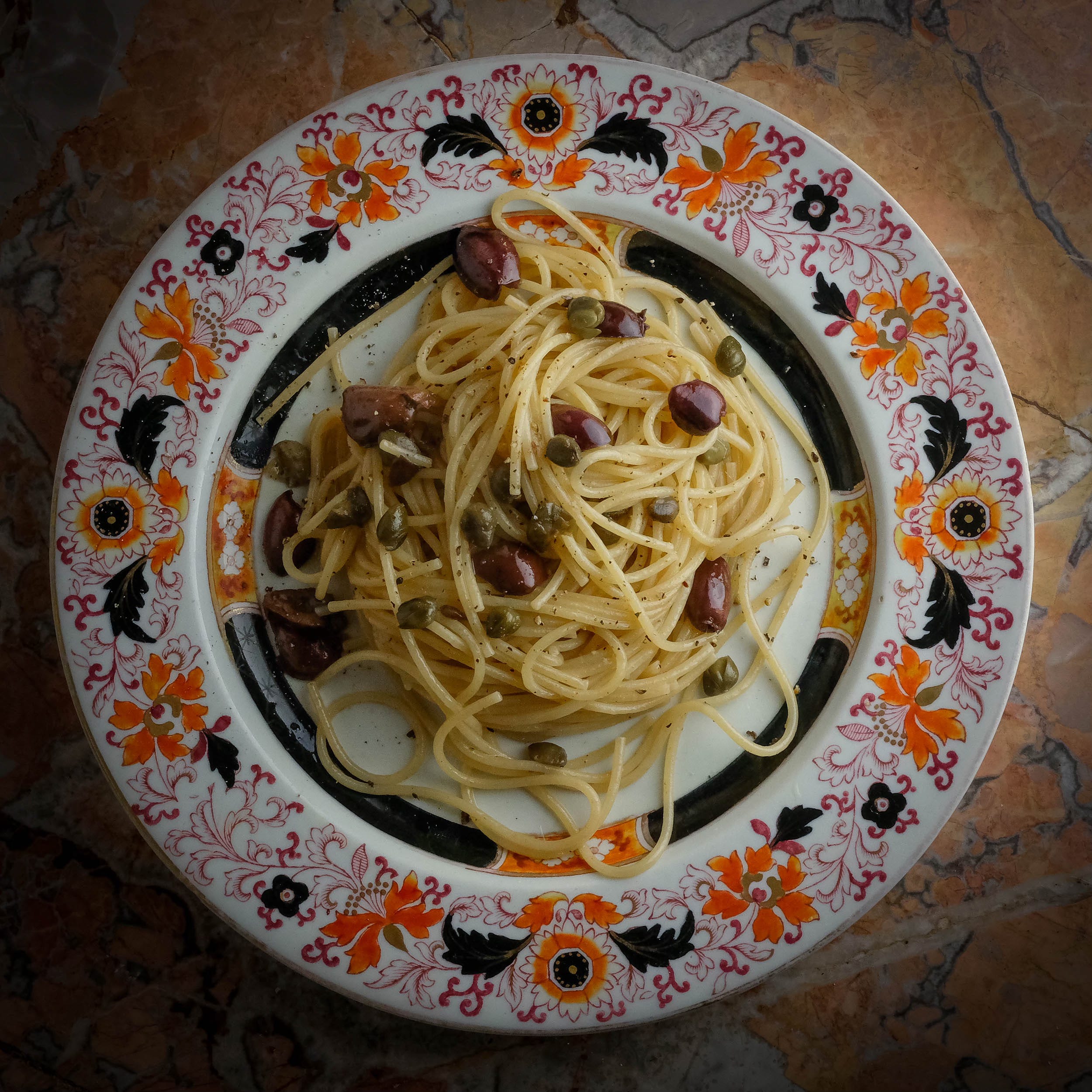
And look at what happens in my diagram, in the space of a few generations from Cavalcanti’s Vermicelli all’Oglio (olives, capers and anchovies) of 1844.
Hardly anything at all.
We have to wait until 1852 for Cavalcanti to come up with a recipe for a Timpano di Vermicelli Ingranito (a baked pasta with tomatoes, olives, anchovies, onion, fish, mushrooms, peas and breadcrumbs)… and then until 1881 for Francesco Palma to publish a recipe for another Timpano, which turns out to be exactly the same as Cavalcanti’s.
But then something very interesting happens at the turn of the century - and it happens in Sicily. Recipes become simpler; the elaborate nineteenth-century Neapolitan timpano gives way to the kind of pasta-and-sauce dishes we’re more accustomed to. And then we get a flurry of activity in, of all places, the United States.
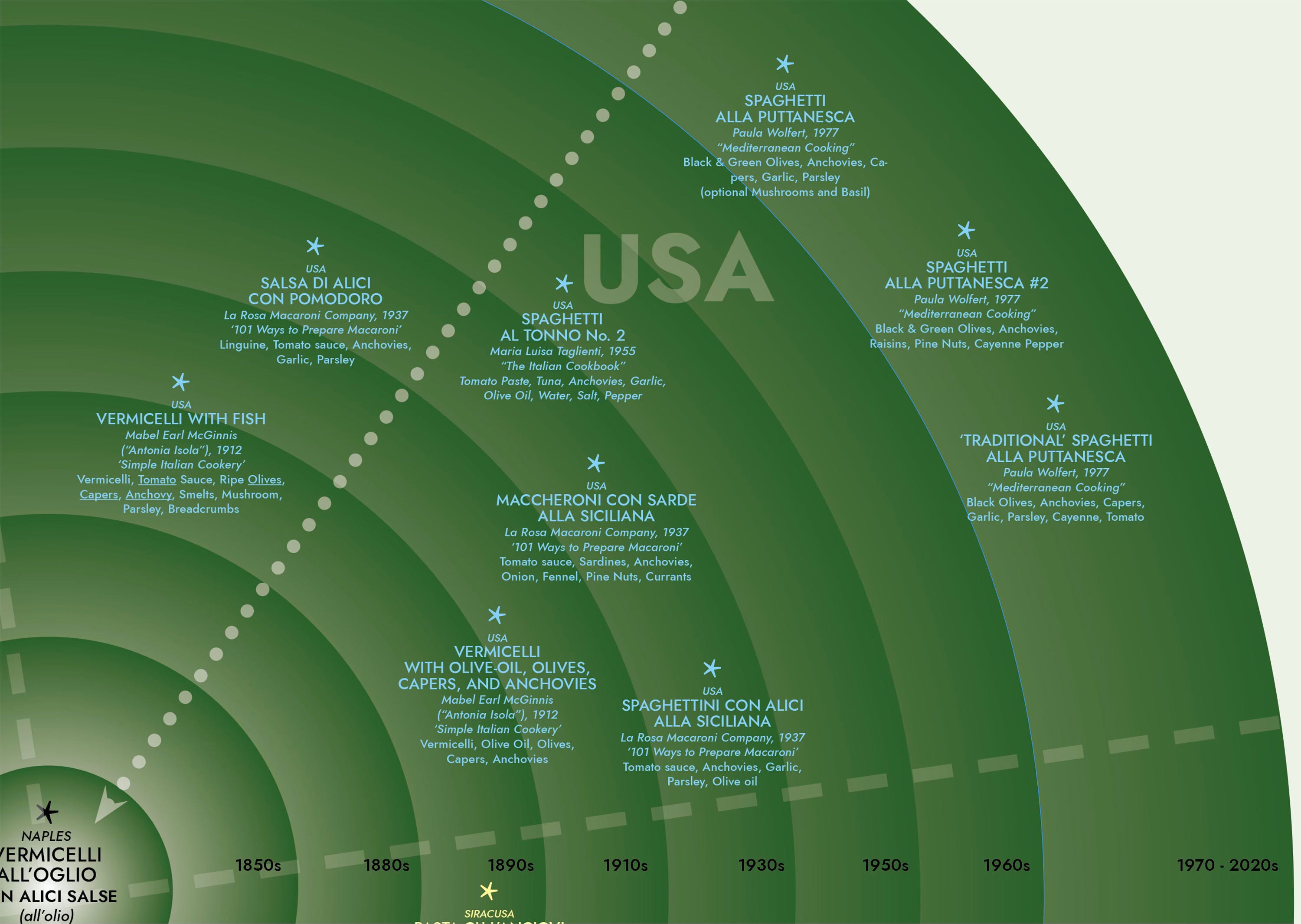
Look at how those 1930s dishes are beginning to resemble our own idea of Puttanesca - many of the ‘modern’ main ingredients are there, as are, noticeably, distinctly Sicilian echoes - fennel, pine nuts, currants. Two recipes even include ‘alla Siciliana’ in their names.
Let’s backtrack a few decades and look at what’s happening in Sicily. In 1910, Alberto Cougnet publishes the first Sicilian recipe in our researched selection to include tomato, along with olives, capers and anchovies… but then can’t stop himself adding yellow peppers, garlic and basil as well.
But the precedent is set. A tomato-based member of the ‘puttanesca’ family of recipes has appeared in Sicily and a couple of decades later the La Rosa Macaroni Co. prints two more tomato-based recipes belonging to that same extended ‘puttanesca’ family.
And that begs the million-dollar question - did ‘Puttanesca’ hitch a ride from Sicily to the USA independently of any influence from Neapolitan recipes? It’s certainly a possibility, but right now, we just haven’t found the evidence.
WHAT WAS INVENTED AND WHERE?
Did you spot what’s been missing from all of the ‘puttanesca’ recipes in the first 100 years of the Evolution Diagram?
The name Puttanesca.
And perhaps that’s the real puzzle here. Because while these recipes have been evolving, crossing borders and changing ingredients for generations, it’s not until the post-war period in the Naples area that our family of recipes finally acquires the name we know it by most today… along with a set of competing claims of invention: the painter Eduardo Colucci, his nephew the Ischia restaurateur Sandro Petti and even the film director Luchino Visconti have all been linked to the invention of the modern recipe of Spaghetti alla Puttanesca.
And, rather interestingly, none of them, as far as we know, includes a link to the prostitutes of Naples.
In the next part of SEX, LIES AND SPAGHETTI, we’ll investigate all these rival claims and ask whether the real invention was actually the dish itself, or simply its scandalous and fantastically unforgettable name…